
Modern addiction treatment combines advanced neuroscience with personalized interventions, offering you markedly higher recovery success rates. You’ll encounter sophisticated approaches including neuromodulation therapies, genetic screening, and brain circuit mapping to target the root causes of addiction. Treatment plans now integrate evidence-based technologies like TMS, CBT, and pharmacogenomic profiling for ideal outcomes. Your trek through today’s addiction recovery terrain reveals groundbreaking solutions that previous generations couldn’t access.
The Evolution of Evidence-Based Treatment Approaches

As addiction treatment has evolved over the past decades, evidence-based approaches have transformed from simple abstinence models to sophisticated, multimodal interventions. Individual and group therapy sessions allow patients to engage in structured talk therapy while gaining insights from both personal counseling and peer support experiences. With 43.7 million Americans needing substance use treatment in 2025, modern facilities have expanded their capacity and accessibility. You’ll now find a thorough integration of neuromodulation therapies, pharmacological treatments, and behavioral interventions working in concert to address substance use disorders. Modern treatment emphasizes compassionate care in all recovery strategies, moving away from outdated moralistic views of addiction.
Today’s patient engagement approaches emphasize personalized care through biomarker monitoring and AI-powered analytics, while stakeholder collaboration initiatives have expanded access to treatments through telehealth networks. You’re seeing breakthrough developments in technologies like TMS and tDCS, alongside established therapies such as CBT and DBT. These interventions are further boosted by digital monitoring systems and virtual reality platforms that provide real-time support.
Treatment protocols now routinely incorporate trauma-informed care and dual diagnosis considerations, reflecting a deeper understanding of addiction’s complex nature.
Understanding Neurobiological Assessment Methods
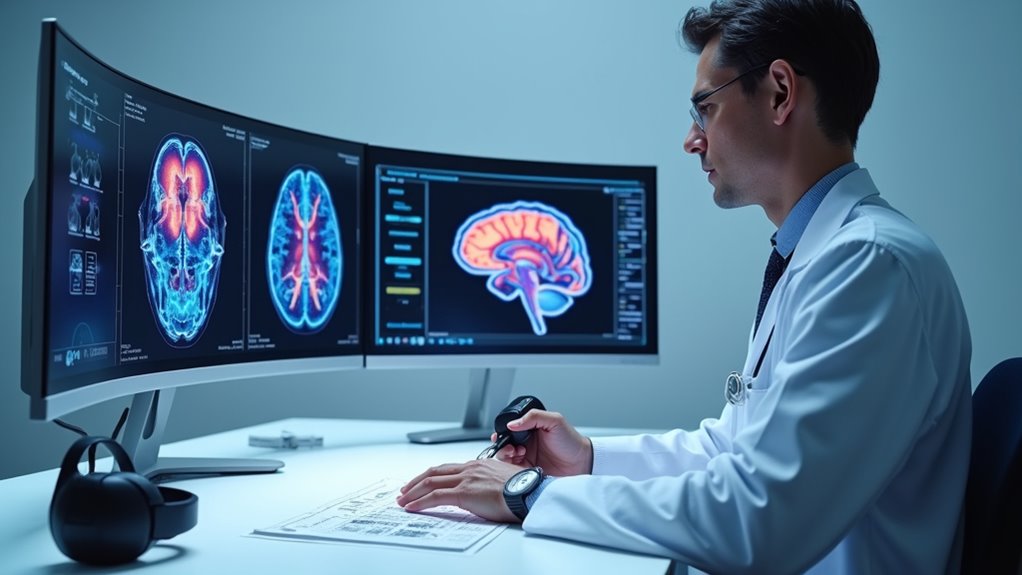
Modern neurobiological assessment methods now enable you to understand your addiction risk and treatment needs through precise brain chemistry testing, including neurotransmitter levels and receptor function analysis.
You’ll benefit from genetic screening tools that identify inherited vulnerabilities and medication response markers, allowing for more targeted therapeutic interventions. Research shows that genetic factors contribute to approximately half of addiction risk.
Advanced neural circuit mapping techniques let your healthcare team visualize specific brain pathway disruptions using functional imaging, supporting personalized treatment strategies based on your unique neurobiological profile.
Comprehensive screening can detect disruptions in basal ganglia function, which plays a crucial role in addiction-related reward processing and behavior formation.
The assessment evaluates three key processes related to addiction, including incentive salience, negative emotionality, and executive functioning deficits.
Brain Chemistry Testing Methods
The evolving field of neurobiological assessment has revolutionized addiction treatment through sophisticated brain chemistry testing techniques. Modern neurotransmitter profiling methods and neural connectivity patterns now provide unprecedented insights into addiction mechanisms. You’ll find distinct testing methods that deliver objective data for personalized treatment plans. Testing helps identify mental health conditions that commonly co-occur with substance use disorders. Research shows that basal ganglia changes can be detected and monitored throughout the treatment process.
| Testing Method | Clinical Application |
|---|---|
| fMRI | Maps reward pathway activity |
| EEG | Monitors real-time brain signals |
| fNIRS | Tracks oxygen-linked neural activity |
| DBS | Measures therapeutic stimulation response |
| Biomarker Panels | Identifies genetic/neurochemical markers |
These advanced testing protocols help clinicians understand your brain’s unique response to substances, enabling targeted interventions. Through continuous monitoring of neural circuits, particularly in the prefrontal cortex and limbic systems, you’ll receive treatment adjustments based on objective measurements rather than subjective assessments alone. The monitoring of dopamine transporter levels during recovery can demonstrate significant brain healing after extended periods of abstinence.
Genetic Predisposition Screening Tools
Genetic predisposition screening tools have transformed addiction medicine by enabling practitioners to identify inherited vulnerabilities before substance use patterns emerge. Recent innovations include TT genotype detection techniques for identifying patients who may respond well to selective serotonin-3 receptor antagonist treatments. You’ll find modern screening protocols incorporate ancestry-based diagnostics and cross-disorder genetic risk assessments to deliver precise, personalized treatment recommendations. One groundbreaking tool is the CARES assessment, which analyzes genetic data combined with environmental factors to predict addiction risk.
Core testing methods now include pharmacogenomic profiling to optimize medication selection and GARS testing to analyze brain reward system markers. These tools examine specific SNPs and dopamine pathway variants that influence addiction susceptibility. Healthcare providers can now conduct high-throughput sequencing to rapidly analyze genetic data for more efficient treatment planning. Through predictive algorithms and polygenic risk scoring, practitioners can calculate your likelihood of developing substance use disorders and tailor interventions accordingly.
When combined with clinical assessments like ASI-MV, genetic screening provides objective biological evidence to support treatment planning and insurance authorizations while reducing treatment resistance through evidence-based documentation.
Neural Circuit Mapping Advances
Breakthrough advances in neural circuit mapping have revolutionized our understanding of addiction’s neurobiological foundations. Through emerging circuit-based treatments and multifaceted neuromodulation applications, you’ll find more targeted interventions that address addiction’s systemic nature rather than isolated brain regions.
Advanced lesion network mapping identifies extensive circuit patterns linked to successful addiction remission. Brain lesion studies have demonstrated spontaneous addiction recovery in some stroke patients. Next-generation synaptic fingerprinting reveals substance-specific effects on neural connectivity. GLP-1 medications have demonstrated significant effects on dopaminergic reward pathways. Ongoing cutting-edge research presentations at international neuroscience conferences continue to shape our understanding of neuromodulatory systems. Transcranial Magnetic Stimulation rebalances disrupted prefrontal circuits to improve impulse control. Real-time circuit analysis enables precise therapeutic targeting across molecularly resolved pathways.
Current research focuses on validating these approaches through clinical trials while expanding coverage across different substance use disorders. The integration of sophisticated mapping techniques with therapeutic applications promises more effective, personalized treatment strategies backed by concrete neurobiological evidence.
Technology’s Role in Modern Recovery Programs
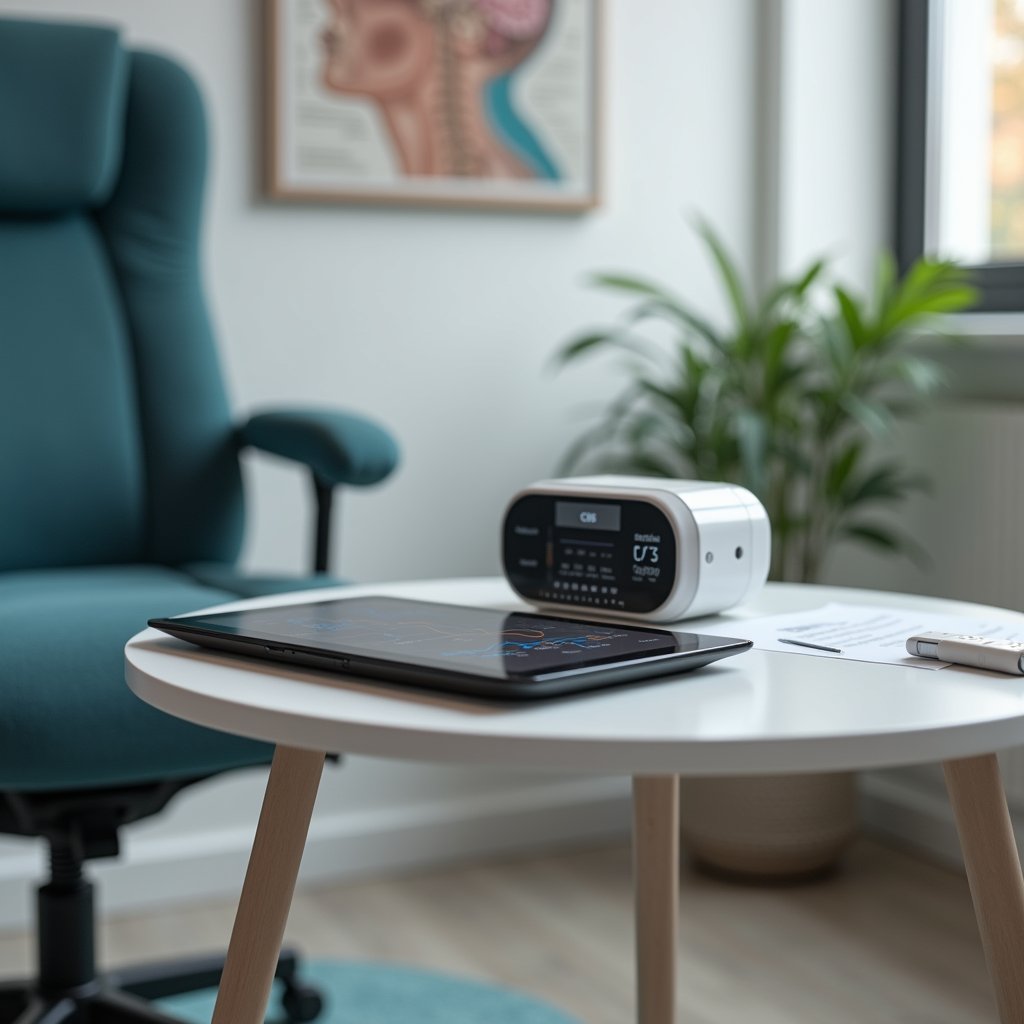
In today’s addiction treatment terrain, you’ll find a sturdy ecosystem of digital recovery tools that combine AI algorithms, wearable devices, and real-time monitoring to support your recovery expedition.
Remote treatment platforms now offer personalized care through telehealth sessions, virtual support groups, and on-demand crisis intervention, eliminating traditional barriers to accessing professional help.
AI-driven addiction management systems analyze your behavioral patterns and biometric data to predict relapse risks and automatically deploy targeted interventions when you need them most.
Digital Recovery Support Tools
Modern technology has revolutionized addiction recovery support through digital tools that provide unprecedented access to treatment resources and ongoing care. Using data-driven insights and innovative mobile applications, you’ll find thorough support systems that adapt to your unique recovery odyssey. These digital solutions now serve over 50.2 million Americans in recovery, offering personalized treatment approaches and real-time monitoring capabilities.
Virtual reality environments that simulate trigger scenarios in safe, controlled settings
AI-powered mobile apps that track progress and predict potential relapse risks
Wearable devices that monitor critical signs and alert support networks during emergencies
Hybrid treatment platforms that combine traditional therapy with digital tracking tools
These technological advances create a more accessible, effective, and discreet recovery experience while maintaining the essential human connection in treatment programs.
Remote Treatment Platforms Today
Remote treatment platforms have fundamentally transformed addiction recovery by delivering thorough care through cutting-edge digital solutions. Through telehealth expansion insights, you’ll find extensive virtual support systems integrating VR therapy, mobile apps, and data-driven personalization. These platforms offer immediate access to licensed professionals and virtual recovery communities, regardless of your location.
| Platform Type | Key Features | Benefits |
|---|---|---|
| Virtual IOP | Structured Sessions | Flexible Scheduling |
| VR Therapy | Trigger Simulation | Safe Environment |
| Mobile Apps | Daily Check-ins | 24/7 Support |
| Telehealth | Live Counseling | Global Access |
You’ll benefit from Gateway Foundation’s remote programs, which combine evidence-based treatments with digital convenience. Their virtual hub provides seamless integration between online and in-person care, while precision medicine approaches guarantee your treatment plan adapts to your unique needs through continuous data monitoring and analysis.
AI-Driven Addiction Management
Artificial Intelligence has revolutionized addiction treatment through sophisticated predictive analytics and personalized intervention strategies. You’ll find significant cost savings through AI-powered screening tools that reduce hospital readmissions by 47% while saving over $100,000 in healthcare expenses. Treatment personalization reaches new heights as AI analyzes your unique health history, substance use patterns, and genetic factors to create targeted intervention plans.
Advanced algorithms continuously monitor your critical signs and behavioral patterns, instantly alerting healthcare providers to potential relapse risks. Machine learning systems analyze thousands of patient outcomes to determine which treatments will work best for your specific situation. AI-powered risk assessment tools identify early warning signs of substance use disorders before they escalate. Smart systems automatically adjust your treatment protocol based on real-time response data.
Innovative Brain Stimulation Therapies
While traditional addiction treatments remain valuable, brain stimulation therapies have emerged as groundbreaking interventions for individuals struggling with substance use disorders. You’ll find two primary approaches: Deep Brain Stimulation (DBS) and non-invasive neuromodulation techniques.
DBS requires careful electrode placement considerations in regions controlling reward and addiction circuits. Through stimulation parameter optimization, this FDA-approved technology can markedly reduce drug-seeking behaviors and cravings.
For less invasive options, you’ll want to investigate repetitive transcranial magnetic stimulation (rTMS), which has shown promising results in treating cocaine and opioid dependencies. A 10-session protocol can effectively reduce withdrawal symptoms by altering neural connectivity patterns.
Recent advances include Medtronic’s adaptive DBS system and emerging technologies like low-intensity focused ultrasound, offering more precise targeting of addiction-related brain circuits.
Personalized Treatment Protocols and Genetic Considerations
Three revolutionary advances in personalized addiction treatment have emerged through the integration of genetic analysis and AI-driven protocols. When combined with microbiome analysis and consideration of epigenetic factors, these advances now enable treatment centers to craft highly individualized recovery plans based on your unique genetic profile and biological markers.
Advanced genomic testing reveals your specific medication response patterns, allowing for precise dosing strategies. AI algorithms continuously monitor your behavioral patterns and biological indicators to predict potential relapse triggers. Real-time data analysis integrates your genetic predispositions with environmental factors to adjust treatment protocols. Machine learning platforms optimize your treatment by analyzing the intersection of your microbiome, genetic markers, and medication efficacy.
This personalized approach considerably reduces trial-and-error interventions while maximizing treatment outcomes through scientifically-validated, individual-specific protocols.
Addressing Co-Occurring Mental Health Conditions
Because mental health conditions frequently intertwine with substance use disorders, addressing both simultaneously has become a cornerstone of modern addiction treatment. With 33.5% of U.S. adults experiencing both conditions, you’ll find that integrated treatment approaches substantially improve comorbid treatment outcomes.
You’ll need to work with healthcare providers who understand that conditions like anxiety, PTSD, and mood disorders often require individualized interventions. Modern treatment protocols combine medication-assisted treatment (MAT) with evidence-based therapies like CBT and DBT. These approaches target both your addiction and mental health symptoms concurrently, reducing relapse risks and improving recovery success rates.
Your treatment team should employ trauma-informed care and may utilize telehealth services to guarantee consistent access to integrated treatment, particularly if you’re in rural areas or face transportation barriers.
Breaking Down Treatment Accessibility Barriers
Despite significant advances in addiction treatment, multiple barriers continue to impede access to essential care services. You’ll find that healthcare policy adaptations and workforce capacity expansion are pivotal to addressing these systemic challenges.
Current obstacles range from financial constraints to geographic disparities, particularly affecting rural and underserved communities.
- Picture long drives to treatment centers, where rural patients must travel hours for basic care
- Envision frustrated patients facing mounting bills from high deductibles and medication costs
- Consider overwhelmed clinicians juggling prior authorizations while their waiting rooms fill
- Visualize telehealth sessions dropping due to poor internet connectivity in remote areas
Today’s treatment milieu requires novel solutions that bridge these gaps, including expanded insurance coverage, improved technological infrastructure, and enriched provider training programs. You’ll need to navigate these barriers while seeking appropriate care options.
Advanced Medical Interventions and Novel Therapies
While traditional addiction treatments remain foundational, cutting-edge medical interventions and novel therapies have revolutionized the field’s therapeutic terrain. You’ll find FDA-approved transcranial magnetic stimulation (TMS) for smoking cessation and peripheral nerve stimulation for opioid withdrawal leading the neuromodulation frontier.
Science has personalized medicine through biomarker-based interventions and AI-driven computational models that analyze optimized drug interactions. GLP-1 agonists show promise in clinical trials for multiple substance use disorders, while emerging psychedelic research continues to shape new therapeutic possibilities. Technological advances include wearable monitoring devices like Soberlink and telehealth integration that augment treatment accessibility and accountability.
These interventions are complemented by culturally customized approaches and the carefrontation model, combining confrontational and empathetic strategies to heighten treatment effectiveness.
Holistic and Integrative Recovery Strategies
Modern addiction treatment has expanded beyond traditional medical interventions to adopt holistic and integrative recovery strategies that target the whole person. You’ll find extensive programs that blend family-centered approaches with spirituality-based interventions, creating a multi-dimensional path to wellness. These strategies incorporate evidence-based practices alongside complementary therapies to address your physical, emotional, and spiritual needs.
Holistic addiction recovery embraces the complete person, combining medical care with spiritual growth and family support for lasting wellness.
Picture yourself practicing mindfulness meditation in a serene garden, guided by experienced practitioners
Envision participating in family therapy sessions where loved ones learn to support your path
See yourself engaging in therapeutic art sessions, expressing emotions through vibrant colors
Visualize attending yoga classes that strengthen both your body and mind through gentle movements
These integrative approaches recognize that sustainable recovery requires addressing all aspects of your well-being, not just addiction symptoms.
Frequently Asked Questions
What Is the Average Duration of Modern Addiction Treatment Programs?
You’ll find that the average treatment length varies based on program intensity requirements and individual needs. While detox typically takes 7+ days, standard programs range from 30 to 90 days.
Short-term programs last about 30 days, but you’ll see better outcomes with 90-day programs. For severe addictions, you might need extended care lasting 6 months to 2 years. Your insurance coverage and personal circumstances will influence your program duration.
How Do Family Dynamics Impact Treatment Success Rates?
Your family’s involvement profoundly impacts your recovery success, with research showing a 40% higher likelihood of sustained sobriety when families actively participate.
Positive family communication patterns can strengthen your support system and reduce relapse triggers, while addressing intergenerational trauma through therapy helps break destructive cycles.
You’ll find that families who engage in treatment processes, whether through counseling or support groups, create a more stable environment that boosts your recovery outcomes.
Can Someone Maintain Employment While Undergoing Intensive Addiction Treatment?
Yes, you can maintain employment while seeking addiction treatment through carefully planned work-life balance strategies. Modern treatment programs offer flexible scheduling options, including evening sessions, telehealth appointments, and intensive outpatient programs that work around your job commitments.
Treatment scheduling considerations include using FMLA protections, employer EAP resources, and modified work arrangements. Research shows 85-95% of people who complete treatment while employed maintain sobriety, demonstrating it’s both feasible and effective.
What Percentage of People Maintain Sobriety After Completing Modern Treatment Programs?
Success rates vary considerably by substance and treatment type. You’ll find that roughly 40-60% of people maintain sobriety after completing extensive treatment programs, though many experience at least one relapse during recovery.
Better outcomes occur with longer treatment duration and robust relapse prevention strategies. Treatment dropout rates affect these figures, but modern approaches combining medication, therapy, and ongoing support services show improved long-term success compared to single-modality treatments.
Are There Age Restrictions for Accessing Certain Addiction Treatment Technologies?
Yes, you’ll find significant years/stage of life restrictions across addiction treatment technologies. Most telehealth availability is limited to adults (18+) due to consent requirements, while minors need parental authorization for many digital platforms.
Insurance coverage requirements often differ between adult and adolescent services. You’ll encounter thresholds for MAT initiation (typically 13+ for alcohol treatment), and many emerging technologies like VR therapy and AI tools prioritize adult users initially.