
Mental health and addiction share deep biological and psychological connections in your brain’s reward and stress response systems. When you’re dealing with mental health challenges, you’re 1.7 times more likely to develop substance use issues, often through self-medication attempts. The relationship works both ways substance use can trigger or worsen mental health symptoms, creating a complex cycle. Understanding these interconnected pathways reveals critical insights for prevention and recovery success.
The Science Behind Co-Occurring Disorders

While mental health conditions and substance use disorders have historically been treated separately, scientific research reveals their intricate biological and psychological interconnections. These co-occurring disorders create complex feedback loops where each condition can intensify the other, making specialized care essential for effective treatment.
Research demonstrates that integrated treatment addressing both conditions simultaneously yields markedly better outcomes than treating each disorder in isolation. The relationship between mental health and addiction often involves shared neural pathways, particularly in areas controlling reward processing and stress response. You’ll find that genetic factors can predispose individuals to both conditions, while environmental triggers like trauma or chronic stress can activate these vulnerabilities. In fact, individuals with substance use disorders are twice as likely to develop mood or anxiety disorders compared to the general population. Understanding these connections helps explain why thorough, evidence-based care is vital for sustainable recovery. Studies show that approximately 35% of adults with mental health disorders also experience substance use disorders, highlighting the significant overlap between these conditions. The early onset of these disorders during adolescence and young adulthood requires carefully coordinated support systems to effectively address both conditions.
Understanding the Bidirectional Relationship
Because mental health conditions and substance use disorders share fundamental biological and environmental risk factors, they often develop and progress in tandem. You’ll find a complex bidirectional influence where each condition can trigger or worsen the other, creating a challenging cycle to break.
When you’re struggling with untreated mental health symptoms, you might turn to substances for temporary relief. However, this self-medication approach typically intensifies your underlying condition. The reciprocal relationship becomes evident as substance use alters brain chemistry, potentially triggering new mental health symptoms or exacerbating existing ones. Research shows that adolescent drug use remains a significant concern, with rates steadily increasing through high school years. For example, while alcohol might temporarily ease your anxiety, it can lead to increased depression and heightened anxiety once the effects wear off. Recent studies demonstrate that this bidirectional pattern is particularly strong in female college students, who show significantly higher correlations between addiction and depression symptoms. Understanding this interconnection is essential for pursuing effective, integrated treatment approaches. Studies reveal that nearly half of individuals with serious psychiatric illness also experience substance use disorder, highlighting the significant overlap between these conditions.
Breaking Down the Statistics

You’ll find the overlap between mental health conditions and substance use disorders strikingly common, with over 19.4 million Americans experiencing both challenges simultaneously in 2021. The numbers reveal a clear pattern of self-medication, as individuals with mental health conditions are 1.7 times more likely to use illicit drugs compared to those without such conditions. This relationship becomes even more apparent when examining specific conditions like schizophrenia, where smoking rates soar to 70-80% compared to just 20% in the general population. Those diagnosed with anxiety or depression face significantly higher risks, being over four times more likely to develop alcohol dependence than the general population.
Alarming Rates of Overlap
The staggering overlap between mental health disorders and substance use presents an urgent public health crisis, with recent statistics painting a sobering picture. You’ll find that among the 46.3 million Americans with substance use disorders, the overlap prevalence with mental health conditions is particularly alarming – as demonstrated by the 30% of suicide deaths involving alcohol or drugs in 2022. The disparity in outcomes is especially evident as Black and Native Americans face disproportionately higher fatal overdose rates. A significant decrease of 4 percent in overdose mortality rates from 2022 to 2023 shows promising progress in addressing this crisis.
Treatment barriers remain a significant concern, with only 6.3% of individuals with SUDs receiving care in 2021. When you examine the brain chemistry impacts, you’ll see how substance use directly affects mood regulation by depleting vital neurotransmitters like serotonin and dopamine. Veterans experiencing these combined challenges face particularly severe outcomes, with an estimated 20 suicides daily among this population. This creates a dangerous cycle where addiction and mental health challenges feed into each other, leading to a sixfold increase in suicide risk compared to the general population.
Numbers Behind Self-Medication
While analyzing self-medication patterns across demographics, recent studies reveal striking statistical trends in how individuals manage their mental health symptoms. Self-medication statistics indicate significant usage rates across various substances, with trauma-alcohol usage being particularly concerning. The data shows clear patterns in how people attempt to cope with mental health challenges without professional guidance. Online resources helping individuals understand these patterns may be temporarily restricted due to security measures activated. Many patients turn to culturally accepted substances like alcohol due to their widespread availability and accessibility. Additionally, fear of side effects leads 15% of patients to avoid taking prescribed medications. These numbers highlight the complex relationship between mental health challenges and substance use, emphasizing the urgent need for professional intervention strategies.
- 38% of men and 45% of women report daily self-medication practices
- 77% of individuals continue using alcohol even after consulting doctors
- 25% of trauma and abuse survivors specifically turn to alcohol
- 50.3% of users take antidepressants daily, while 32% use marijuana
- 24% of individuals simultaneously target both mental and physical symptoms
Common Risk Factors and Triggers
Understanding risk factors for addiction and mental health challenges requires examining multiple interconnected influences that shape an individual’s vulnerability.
Your genetic predisposition can greatly increase your risk, especially when combined with environmental influences like early exposure to substances. Family dynamics play an important role, as parental substance use and dysfunctional relationships often create patterns that can repeat across generations. Mental health conditions frequently co-occur with addiction, creating a complex web of challenges that reinforce each other. Your childhood experiences, including trauma or neglect, can leave lasting impacts on brain development and emotional regulation. Social factors like peer pressure and social isolation can drive substance use, while protective elements like strong family support may help reduce risks. Personality characteristics like impulsive behavior can heighten susceptibility to addictive patterns. Living in conditions of stress and poverty can significantly increase vulnerability to both mental health issues and substance use disorders. Understanding these interconnected factors is essential for identifying personal vulnerabilities and developing effective prevention strategies.
The Role of Brain Chemistry
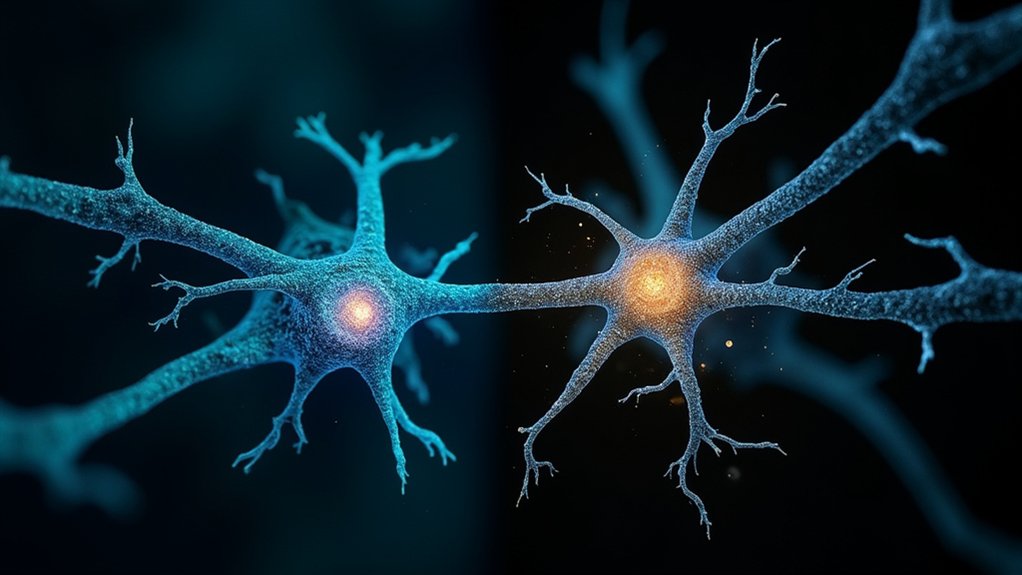
Your brain’s chemistry plays a central role in both mental health and addiction through interconnected neurotransmitter systems that influence mood, behavior, and reward processing. When you develop an addiction, your brain’s delicate chemical balance becomes disrupted, leading to altered dopamine and serotonin levels that can trigger or worsen existing mental health symptoms. The brain’s billions of neurons form complex networks that become progressively impaired with continued substance use. You’ll find that both conditions share overlapping neural circuits and chemical pathways, which helps explain why over 17 million adults experience co-occurring mental health and substance use disorders.
Neurotransmitters Drive Both Disorders
The intricate relationship between mental health disorders and addiction becomes clearer when examining the brain’s chemical messaging system. Neurotransmitter interactions drive both conditions through overlapping pathways, where addiction mechanisms can trigger or worsen mental health symptoms.
- Dopamine surges from substance use can reset your brain’s reward system, leading to depression when not using
- Your endorphin production becomes compromised with opiate use, increasing vulnerability to anxiety and trauma
- Serotonin disruption through hallucinogens can destabilize your mood regulation, worsening existing mental health conditions
- Stimulant-induced norepinephrine spikes mirror symptoms of anxiety and panic disorders
- Chronic substance use creates a cascade effect across multiple neurotransmitter systems, amplifying the risk of developing co-occurring mental health disorders
Shared Reward System Dysfunction
While brain chemistry varies among individuals, shared reward system dysfunction lies at the heart of both addiction and mental health disorders. Your brain’s reward anticipation system becomes disrupted, creating an imbalance where natural pleasures feel less satisfying while substance-related cues trigger intense cravings. You’ll notice changes in emotional regulation as your prefrontal cortex‘s ability to control impulses weakens.
These disruptions create a challenging cycle: your brain becomes less responsive to everyday joys while becoming hypersensitive to substance-related triggers. Social connections and daily activities that once brought satisfaction may feel hollow, pushing you further toward addictive behaviors. Understanding this shared dysfunction helps explain why mental health challenges and addiction so often occur together, requiring integrated treatment approaches that address both conditions simultaneously.
Treatment Challenges and Solutions
Despite significant advances in understanding co-occurring disorders, modern healthcare systems face substantial challenges in delivering integrated treatment for mental health and substance use disorders. The fragmented nature of care delivery, combined with workforce shortages and systemic barriers, creates significant obstacles for those seeking help.
- Treatment integration remains limited, with only 18% of SUD programs equipped for dual diagnosis care
- Access barriers include high out-of-pocket costs and inadequate insurance coverage
- Workforce shortages are particularly acute in dual diagnosis training and expertise
- Stigma reduction efforts struggle against persistent bias, especially regarding medication use
- Evidence-based practices face slow adoption rates across treatment systems
You’ll find these challenges magnified in rural and minority communities, where insurance disparities and limited community resources further restrict access to thorough care. The pandemic has intensified these systemic issues, highlighting the urgent need for integrated solutions and expanded recovery support services.
Special Population Considerations
Understanding specific population needs emerges as a central focus in addressing mental health and substance use disorders effectively. You’ll find that cultural barriers greatly impact treatment access, particularly among AI/AN and Hispanic/Latino communities where substance use rates remain concerning. Gender disparities reveal higher mental illness rates among women (23%) versus men (15%), while youth vulnerability manifests differently across ethnic groups.
Disability challenges present stark realities, with disabled adults facing double the risk of adverse mental health and substance use compared to their non-disabled peers. They’re also more likely to engage in polysubstance use (16.9%). Community support becomes essential when addressing these disparities, especially considering how cultural factors, trauma experiences, and accessibility issues intersect with treatment needs across these diverse populations.
Long-Term Health Consequences
The long-term health consequences of substance use disorders extend far beyond immediate intoxication effects, creating a complex web of physical and psychological challenges. Understanding these long term effects is vital for recognizing the full scope of health complications that can develop over time.
- Stimulant use can damage your cardiovascular system and cause severe dental problems, while also leading to chronic skin conditions
- Benzodiazepine dependency often results in lasting cognitive impairment, affecting memory and concentration
- Hallucinogen use may trigger Hallucinogen Persisting Perception Disorder (HPPD), causing ongoing visual disturbances
- Marijuana’s long-term use can impact cognitive function, particularly affecting learning and memory
- These health complications often require specialized medical intervention and may persist even after achieving sobriety
Frequently Asked Questions
Can Mental Health Medications Increase the Risk of Developing Substance Addiction?
Yes, your mental health medications can influence addiction risk, particularly when not taken as prescribed. Prescription stimulants and sedatives carry considerable potential for dependency, with data showing 12.7% of misusers developing addiction. You’ll face increased medication effects if you have underlying mental health conditions. However, following your doctor’s prescribed dosage and maintaining open communication about medication effects greatly reduces your addiction risk.
How Do Childhood Trauma and Genetics Interact in Co-Occurring Disorders?
Your childhood trauma and genetic predisposition can create a powerful interaction that influences your vulnerability to co-occurring disorders. When you’ve experienced early trauma, it can activate certain genes that might otherwise remain dormant. This gene-environment interaction can disrupt your stress response system and brain development, making you more susceptible to both mental health and substance use issues. Your genetic makeup may also determine how severely trauma affects your long-term well-being.
What Role Does Social Media Play in Mental Health and Addiction?
Social media considerably impacts your mental health through constant social comparison and dopamine-driven engagement patterns. While you might find online support communities beneficial, excessive platform use (>3 hours daily) doubles your risk of developing anxiety and depression. You’re particularly vulnerable to addiction-like behaviors through compulsive checking and FOMO, as platforms trigger dopamine releases that reinforce usage patterns. This digital environment can worsen existing mental health challenges through sleep disruption and self-esteem issues.
Are Certain Personality Types More Vulnerable to Both Conditions?
Your personality traits can greatly influence your vulnerability to mental health conditions and addiction. If you have Type A tendencies (perfectionism) or Type D characteristics (chronic negativity), you’re more susceptible to both issues. Other vulnerability factors include neuroticism, impulsivity, and poor emotional regulation. Type B’s social nature and Type C’s emotional suppression can also increase risks. Understanding these patterns can help you recognize and address potential concerns early.
Can Spiritual or Religious Practices Help Prevent Co-Occurring Disorders?
Yes, spiritual practices and religious support can markedly protect against co-occurring disorders. You’ll find that engaging in faith-based activities reduces your risk of depression and anxiety while building stress resilience. Through community bonding and meditation, you’re developing essential coping tools. Research shows that when you’re spiritually engaged, you’ll experience greater social support and improved mental health outcomes. These practices provide meaning-making frameworks that help prevent both addiction and mental health challenges.