
Fentanyl typically clears from your system in 15-42 hours, but can be detectable in tests for 1-3 days or longer. Your elimination time depends on several factors: lifespan, liver function, kidney health, usage frequency, and body composition. Administration method matters too patches extend detection time by 24+ hours after removal, while injectable forms clear faster. Testing methods vary in sensitivity: urine (24-72 hours), blood (5-48 hours), saliva (1-4 days), and hair (up to 90 days). These timeframes considerably impact medical and testing contexts.
Understanding Fentanyl’s Half-Life in the Human Body
To understand how long fentanyl remains in your system, you’ll need to grasp the concept of its half-life. Fentanyl has a relatively short half-life of 3-7 hours, meaning it takes this long for your body to eliminate half of the drug concentration.
Your liver handles most fentanyl metabolism, converting it into norfentanyl and other metabolites. Despite its short half-life, fentanyl binds strongly to opioid receptors, creating powerful effects even at low doses. This binding efficiency explains why it’s 50-100 times more potent than morphine.
Remember that half-life doesn’t equate to complete elimination. It takes approximately 5-6 half-lives to clear most substances from your system. For fentanyl, this means 15-42 hours for significant clearance, though detection windows vary by test type.
Factors That Affect How Quickly Fentanyl Leaves Your System
While fentanyl’s standard half-life provides a baseline estimate, several individual factors greatly impact its elimination rate from your system. Your metabolism, kidney function, and liver health directly influence how quickly you process and excrete the drug.
| Factor | Impact | Detection Window |
|---|---|---|
| Maturity | Older adults eliminate slower | Extended by 1-2 days |
| Liver function | Impaired function slows clearance | May double elimination time |
| Kidney health | Poor function delays excretion | Increases by 30-50% |
| Frequency of fentanyl usage | Chronic use leads to accumulation | Extends window by days/weeks |
| Body hydration | Dehydration slows elimination | Can delay clearance by hours |
Body composition also matters fentanyl accumulates in fatty tissue. Your genetic makeup affects enzyme efficiency, with some individuals naturally metabolizing opioids faster than others.
Detection Windows for Different Drug Test Methods
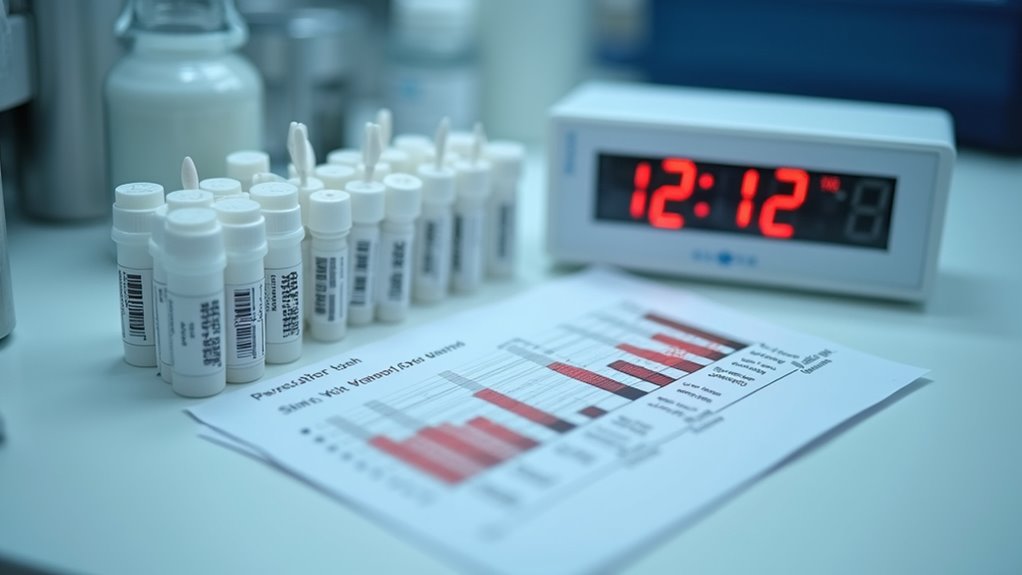
Four primary testing methods exist for fentanyl detection, each with distinct timeframes for identifying the drug in your system. Urine tests, the most common drug testing approach, can detect fentanyl for 24-72 hours after your last use. Blood tests offer a narrower window, typically identifying fentanyl for only 5-48 hours post-consumption.
If you’re facing a saliva test, fentanyl remains detectable for approximately 1-4 days. Hair testing provides the longest detection window among all testing methods, potentially identifying fentanyl use for up to 90 days. These timeframes vary considerably based on your individual metabolism, dosage, frequency of use, and the sensitivity of the specific test being administered.
For accurate results, most clinical settings use specialized fentanyl-specific testing rather than standard drug panels.
The Difference Between Patch, Injectable, and Oral Fentanyl Clearance
Fentanyl administration methods greatly affect how quickly the drug leaves your system. Transdermal patches provide slow, continuous release over 72 hours with gradual patch absorption that continues even after removal, extending detection time by 24+ hours after the patch is discarded.
Injectable fentanyl has rapid onset and enters your bloodstream immediately, but clears faster than patch formulations. You’ll typically eliminate injectable fentanyl within 8-24 hours, though metabolites remain detectable longer.
Injectable fentanyl enters your system rapidly but clears quicker than patches, typically eliminating within 8-24 hours.
Oral fentanyl products (lozenges, tablets) have lower oral bioavailability (approximately 50%) but still produce considerable blood concentrations. These forms generally clear from your system within 12-36 hours, depending on fentanyl dosage and individual metabolism factors.
Your maturity, kidney function, and liver health greatly influence clearance rates regardless of administration method, potentially doubling elimination times in compromised patients.
How Metabolism and Body Composition Impact Fentanyl Elimination
Your liver function considerably impacts how quickly your body can metabolize fentanyl, with impaired hepatic function potentially doubling elimination times. Fentanyl’s lipophilic properties cause it to accumulate in fat tissue, meaning individuals with higher body fat percentages may retain the drug longer than those with leaner compositions. Your personal metabolic rate, influenced by factors such as maturity, genetics, and general health, creates considerable variation in fentanyl clearance times between individuals even when dosages are identical.
Liver Function Effects
Since the liver serves as the primary site for fentanyl metabolism, any impairment to its function can greatly extend the drug’s presence in your system. Your liver’s health directly impacts clearance rates through its production of CYP3A4 enzymes, which break down fentanyl into inactive metabolites.
| Liver Condition | Effect on Fentanyl Clearance |
|---|---|
| Normal function | Standard 13-22 hour half-life |
| Mild cirrhosis | 35-45% slower elimination |
| Hepatitis | Variable impairment |
| Severe cirrhosis | Up to 3x longer half-life |
| Post-transplant | Gradual improvement with liver regeneration |
Conditions like cirrhosis can double or triple elimination times, requiring dosage adjustments in medical settings. Even moderate liver impairment can greatly prolong detection windows in drug tests, as your liver enzymes’ reduced activity means fentanyl remains active longer.
Fat Tissue Storage
As a lipophilic compound, fentanyl readily distributes into adipose tissue, creating a reservoir that can greatly alter elimination patterns. Your body composition considerably impacts how long the drug remains in your system. Individuals with higher body fat percentages typically experience longer detection windows due to improved fat storage capacity.
The relationship between body composition and fentanyl elimination involves:
- Fat-to-water ratio – Higher body fat percentage increases the drug’s volume of distribution, extending its presence
- Rate of tissue metabolism – Adipose tissue has lower blood flow than other tissues, slowing drug release
- Mobilization during weight loss – Stored fentanyl can be released back into circulation when fat cells break down
You’ll experience slower elimination if you have more adipose tissue, as the drug must initially be released from fat stores before undergoing hepatic metabolism.
Individual Metabolic Rates
Beyond adipose tissue distribution, metabolic rate fundamentally determines fentanyl elimination speed from your system. Your liver processes fentanyl primarily through CYP3A4 enzymes, and significant individual variability exists in how efficiently these metabolic pathways function.
If you have a naturally faster metabolism, you’ll typically clear fentanyl more quickly than someone with a slower metabolic rate. The passage of time impacts this process substantially older individuals generally experience decreased liver function, resulting in slower drug elimination. Likewise, certain medical conditions affecting liver or kidney function can extend fentanyl’s presence in your system by hours or even days.
Genetic factors also influence these metabolic pathways, explaining why two people of comparable weight and stage of life might eliminate fentanyl at different rates. This variability makes standard detection timelines approximate rather than absolute.
Comparing Fentanyl’s Detection Time to Other Opioids
While fentanyl clears from your system relatively quickly, its detection window differs markedly from other commonly used opioids. This fentanyl comparison reveals its unique pharmacokinetic profile among analgesics. Metabolic pathways and half-lives create significant opioid differences in detection timeframes.
Fentanyl’s distinctive elimination patterns set it apart from traditional opioids in testing scenarios.
Standard detection windows in urine tests show:
- Heroin: Detectable for 1-3 days, with metabolites clearing relatively quickly due to its short half-life
- Morphine/Codeine: Typically remain detectable for 2-4 days, longer than heroin but shorter than synthetic opioids
- Methadone: Detectable for 3-7 days or more, substantially longer than fentanyl’s typical 1-3 day window
You’ll find fentanyl’s detection time falls between short-acting opiates like heroin and longer-lasting medications like methadone, though individual metabolism variables still apply to all opioids.
Medical Detoxification: Expediting the Clearance Process
Medical detoxification offers supervised protocols that can potentially accelerate fentanyl elimination from your system. These specialized programs combine medical oversight with supportive care to manage withdrawal symptoms while your body processes the drug.
Under clinical supervision, you’ll receive medications that can help manage cravings and uncomfortable symptoms. Hydration therapy and nutritional support further enhance your body’s natural detoxification pathways. Some medical interventions include tapering protocols using medications like buprenorphine or methadone.
Professional detox programs also monitor essential signs and address complications that might arise during withdrawal. While these interventions won’t immediately clear fentanyl from your system, they create favorable conditions for your body’s elimination processes while keeping you safe and comfortable. The duration and approach of detoxification vary based on your usage history and individual health factors.
Common Misconceptions About Fentanyl Detection Times
Several persistent myths about fentanyl testing can lead to dangerous misunderstandings about detection windows. When considering fentanyl detection timeframes, you’ll find numerous detection misconceptions circulating among users and even some healthcare providers.
Common fentanyl myths include:
- “Drinking water flushes fentanyl out faster” – Hydration alone cannot greatly accelerate elimination rates, as metabolic processing occurs primarily through liver enzymes.
- “All tests detect fentanyl uniformly” – Different testing methods have varying detection thresholds; standard drug panels often miss fentanyl entirely.
- “Detection windows are identical for everyone” – Individual factors such as metabolism, kidney function, and dosage history considerably impact clearance times.
Understanding accurate detection timelines is essential for medical treatment planning and harm reduction strategies, especially given fentanyl’s potency and high overdose risk.
Special Considerations for Chronic Users and Dependency
For individuals with long-term fentanyl exposure, elimination timelines differ markedly from occasional users due to the drug’s accumulation in fatty tissues. When you’ve engaged in chronic consumption, fentanyl metabolites can remain detectable for considerably longer periods sometimes weeks rather than days.
Your body develops tolerance through consistent use, requiring higher doses to achieve the same effect. This tolerance parallels dependency signs including withdrawal symptoms when usage stops: sweating, muscle aches, insomnia, and intense cravings. These symptoms typically begin 6-12 hours after your last dose.
If you’re undergoing drug testing while dependent on fentanyl, you’ll need a longer abstinence period before testing clean. Medical detoxification programs consider these extended clearance times when developing treatment protocols, often requiring 10-14 days of monitoring.
Steps to Support Your Body’s Natural Elimination Process
While your body naturally processes fentanyl through metabolic pathways, you can take specific actions to potentially improve this elimination process. Supporting your liver and kidneys the primary organs responsible for drug metabolism and excretion may help enhance clearance rates.
Your body’s natural detoxification systems can be optimized to potentially enhance fentanyl elimination through targeted support of liver and kidney function.
- Maintain ideal hydration – Consuming 2-3 liters of water daily facilitates kidney filtration and urinary excretion of metabolites, potentially accelerating clearance times.
- Focus on nutrition support – Incorporate foods rich in antioxidants and B vitamins that support liver function, including leafy greens, berries, and whole grains.
- Engage in moderate physical activity – Regular exercise increases circulation and metabolic rate, potentially enhancing drug elimination through increased perspiration and improved organ function.
These strategies complement not replace medical supervision during detoxification from fentanyl.
Frequently Asked Questions
Will Fentanyl Withdrawal Symptoms Affect Drug Test Results?
Fentanyl withdrawal symptoms won’t directly affect your drug test results. During fentanyl detox, your body eliminates the drug regardless of your withdrawal experience. The withdrawal timeline (typically 7-10 days) reflects your body’s adaptation to functioning without the drug, while detection windows depend on test type and metabolism. Your physical symptoms like sweating or vomiting don’t alter the drug’s elimination rate or the test’s ability to detect fentanyl metabolites in your system.
Can Secondhand Exposure to Fentanyl Cause a Positive Test?
Casual secondhand fentanyl exposure is unlikely to cause a positive drug test. You’d need significant exposure to test positive, such as being in an enclosed space with heavy fentanyl smoke. Modern drug testing methods typically require minimum concentration thresholds that casual passive exposure doesn’t reach. However, if you work in environments with regular fentanyl exposure (like certain healthcare settings), you should document this before undergoing testing to explain any potential positive results.
Does Naloxone Affect How Quickly Fentanyl Leaves Your System?
Naloxone doesn’t affect fentanyl metabolism or how quickly it leaves your system. While naloxone effectively reverses fentanyl’s respiratory depression by competing for opioid receptors, it doesn’t speed up the elimination process. Your body will continue to metabolize fentanyl through your liver at the same rate regardless of naloxone administration. The antagonist effect of naloxone is temporary (30-90 minutes), often shorter than fentanyl’s presence in your system, which is why multiple naloxone doses may be needed.
Can I Test Positive for Fentanyl From Prescription Pain Medications?
Yes, you can test positive for fentanyl from certain prescription pain medications. Some prescription opioids like Duragesic, Actiq, and Sublimaze contain fentanyl as their active ingredient. Standard drug tests can’t distinguish between prescribed and illicit fentanyl during detection. If you’re taking prescribed fentanyl products, inform testing administrators and provide proof of your valid prescription to avoid misinterpretation of positive results. Even medical fentanyl use will trigger positive results on most standard drug screens.
Are Home Drug Tests Reliable for Detecting Fentanyl?
Home testing kits for fentanyl detection methods have limitations in accuracy. You’ll find most standard home tests don’t reliably detect fentanyl without specific fentanyl test strips. Even when using proper fentanyl-specific tests, factors like sample collection techniques and detection thresholds affect results. For conclusive screening, laboratory testing remains superior. If you need definitive results, consider clinical testing which employs more sophisticated technology and provides greater sensitivity than home testing accuracy can deliver.