
Addiction considerably disrupts your brain’s chemical balance and reward circuits, directly impacting your mental health. You’ll experience altered decision-making abilities, heightened stress responses, and difficulties regulating emotions. Research shows that 50% of individuals with mental health issues develop substance use disorders, while 40% of those with substance use disorders face mental health challenges. Understanding this two-way relationship between addiction and mental health reveals critical pathways for effective treatment and recovery.
The Hidden Link Between Mental Health and Substance Use

While mental health and substance use disorders have long been studied separately, mounting evidence reveals their profound interconnection. Research shows that half of all individuals who develop one condition will experience the other in their lifetime, with 1.4% of U.S. adults currently facing both challenges.
The relationship operates through multiple pathways. You’ll find that substance triggers often stem from attempts at emotional numbing, as people try to self-medicate their psychological pain. This connection is particularly strong in conditions like depression, anxiety, and PTSD. Young adults aged 18-25 require coordinated support systems during this critical transition period. The biological basis involves shared genetic vulnerabilities and disrupted dopamine systems that affect both mental health and addiction. Patients with bipolar disorder face particularly complex challenges in managing both conditions simultaneously. Understanding these links is vital, as treatment outcomes suffer when either condition goes unaddressed. Recent data indicates that 9.5 million adults struggle with co-occurring disorders, highlighting the urgency of integrated care approaches. Studies show that approximately 35% of adults with a diagnosed mental disorder also experience substance use disorder, demonstrating the significant overlap between these conditions.
Understanding Co-Occurring Disorders
When mental health and substance use disorders occur simultaneously, they create complex challenges that require specialized understanding and treatment approaches. Research shows that over 21.5 million U.S. adults experience co-occurring disorders, with more than 40% of individuals with substance use disorders also facing mental health conditions.
You’ll find that diagnosis challenges arise from overlapping symptoms between these conditions. Common combinations include mood disorders affecting 28% of drug users, anxiety disorders present in 24% of cases, and personality disorders occurring in 44% of instances. Treatment options have expanded significantly, with integrated dual disorder treatment showing promising results in managing both conditions simultaneously. Despite the high prevalence, only 25-30% of people receive thorough dual diagnosis treatment. The impact is significant: you’re likely to see poorer treatment outcomes, increased mortality risks, and declining social functioning when these conditions remain untreated or improperly addressed. Unfortunately, a staggering 52.5% receive no treatment at all for their co-occurring conditions.
Breaking Down the Brain Chemistry Connection
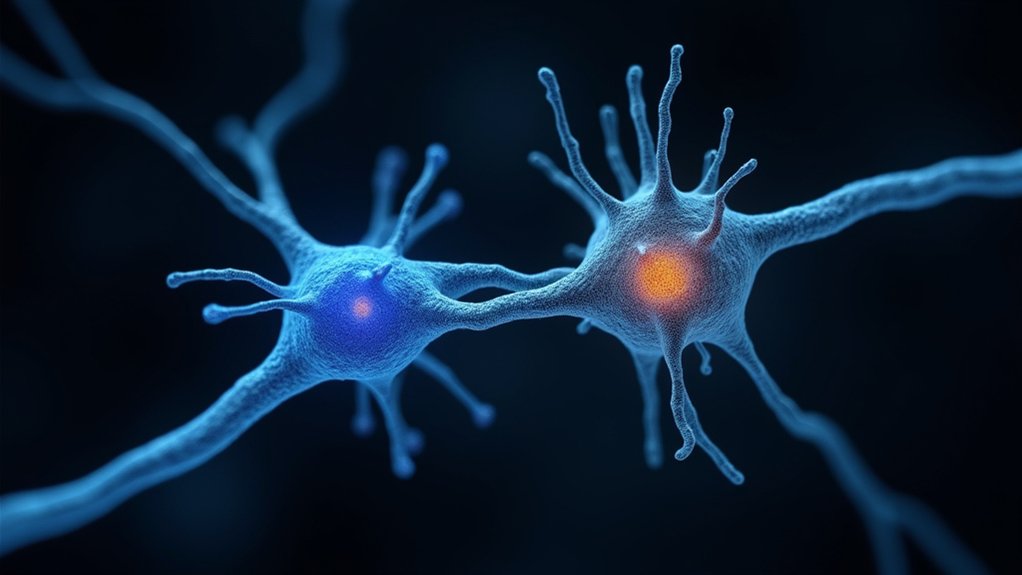
Understanding the brain chemistry behind addiction reveals intricate connections between substance use and mental health disorders. When you use drugs, your brain’s dopamine dynamics undergo significant disruption, leading to intense euphoria followed by depleted reserves. This neurotransmitter balance disturbance affects multiple brain regions simultaneously. The billions of neurons in your brain form complex networks that become progressively altered with continued drug use. As addiction develops, survival behaviors are hijacked by the brain’s overwhelmed reward circuits.
Your reward circuitry, particularly the basal ganglia, becomes overactivated while your prefrontal cortex weakens. This combination impairs your decision-making abilities and strengthens automatic drug-seeking behaviors. The amygdala’s heightened sensitivity increases your stress responses, while disruptions in serotonin and GABA systems can trigger depression and anxiety. These neurological changes create a complex cycle where substance use exacerbates mental health symptoms, making recovery more challenging without addressing both conditions through targeted interventions like therapy and medication-assisted treatment. Fortunately, the brain’s natural neuroplasticity capacity allows for healing and rewiring of neural pathways during recovery.
Risk Factors and Warning Signs
The complex interplay between brain chemistry and addiction points directly to identifiable risk factors and warning signs. Your genetic makeup accounts for 40-60% of addiction risk, while environmental factors like family dysfunction and peer pressure can trigger these predispositions. If you’re dealing with mental health conditions, you’re twice as likely to develop substance use disorders. Youth facing addiction commonly experience poor health outcomes and higher rates of physical illness. Women and men experience addiction differently, with men having higher rates of substance use disorders.
Warning signs often manifest through behavioral changes. You’ll notice secretive actions, social withdrawal, and increased risk-taking behaviors in those struggling with addiction. Physical deterioration, including unexplained weight loss and sleep disturbances, may also emerge. Key risk factors include trauma exposure, academic difficulties, and socioeconomic challenges. Additionally, certain populations face heightened vulnerability adolescence due to brain development stages, and individuals experiencing homelessness or financial instability show considerably higher rates of substance use disorders. Research shows that 10.5% of children live with a parent who has an alcohol use disorder, potentially perpetuating cycles of addiction risk.
Impact on Emotional Well-being

When you struggle with addiction and mental health issues, your ability to regulate emotions becomes greatly impaired, leading to heightened reactions and difficulty managing daily stressors. Your brain’s stress response system can become chronically activated, making it harder to return to a balanced emotional state even during periods of relative calm. These disruptions in emotional regulation often create a self-perpetuating cycle where substance use temporarily masks emotional distress but ultimately intensifies the underlying mental health challenges. Research shows that major depressive episodes significantly increase the likelihood of substance use among adolescents, with higher rates of illicit drug use and marijuana consumption. The presence of co-existing mental disorders can make treating addiction particularly complex, as each condition has the potential to worsen the other.
Emotional Regulation Challenges
Research consistently demonstrates that emotional regulation difficulties serve as a vital driving force behind substance use disorders and their persistence. When you’re struggling with addiction, you’ll face heightened sensitivity to emotional triggers and diminished impulse control, making stress management particularly challenging. Studies show your DERS scores may be markedly raised, indicating severe regulation deficits compared to non-addicted individuals. The 12-step model provides essential tools for managing emotional disturbances during recovery. Just as security measures protect websites from threats, addiction treatment centers implement protective protocols for patient wellbeing.
You’ll often find yourself relying on substances as substitutes for healthy coping strategies, which further weakens your capacity for adaptive responses. This creates a cycle where emotional awareness decreases while dependency increases. Dialectical Behavior Therapy has proven particularly effective for developing healthier emotional responses. To break this pattern, you’ll need to develop resilience building techniques through various therapy modalities and support networks. Research indicates that learning proper regulation techniques becomes especially important if you’re dealing with co-occurring mental health conditions, which can amplify these challenges.
Chronic Stress Response Disruption
Through prolonged substance use, your brain’s stress response system undergoes significant dysregulation, particularly affecting the hypothalamic-pituitary-adrenal (HPA) axis. This neurobiological change impacts your ability to manage stress effectively, creating a cycle that intensifies substance cravings and withdrawal symptoms.
Your chronic stress response disruption manifests in several ways:
- Increased cortisol levels persist despite blunted responses to stressors, reducing your stress resilience
- Prefrontal cortex dysfunction impairs decision-making under pressure, increasing vulnerability to addiction triggers
- Autonomic nervous system changes lead to heightened anxiety and emotional dysregulation
These alterations create a challenging cycle where stress becomes both a trigger for substance use and a consequence of addiction, making it essential to address both conditions simultaneously in treatment.
The Cycle of Self-Medication
When you turn to substances for emotional relief, you’re initiating a destructive cycle where temporary comfort masks deeper mental health issues while creating chemical dependencies. Your brain’s natural ability to regulate mood deteriorates as substances artificially manipulate neurotransmitter systems, leading to worsening depression and anxiety over time. Breaking free from this pattern requires acknowledging that self-medication offers only fleeting escape while compounding the underlying problems you’re trying to avoid.
Temporary Relief, Lasting Damage
Despite offering momentary escape from mental health symptoms, self-medication through substance use creates a destructive cycle that worsens both addiction and underlying conditions. While you might seek temporary solutions through drugs or alcohol, these choices lead to lasting consequences that compound your original mental health challenges.
- Your brain adapts to substance use, requiring higher doses to achieve the same relief while intensifying underlying symptoms through a negative feedback loop called hyperkatifeia
- Initial attempts to manage conditions like depression or anxiety through self-medication often trigger new mental health complications, including substance-induced psychosis or mood disorders
- You’ll experience cognitive impairment and deteriorating physical health, making it increasingly difficult to maintain relationships, work performance, and overall quality of life
These patterns of self-medication ultimately delay proper treatment and recovery, prolonging both addiction and mental health struggles.
Breaking Escape Patterns Now
Breaking the cycle of self-medication requires understanding its pervasive nature and identifying specific intervention points. You’ll need professional guidance, as 86% of addiction cases involve co-occurring mental health disorders that complicate recovery. Start by acknowledging that while substances like alcohol might offer temporary relief, they’re worsening your symptoms in 77% of cases.
Focus on mindful alternatives and holistic practices that address both addiction and mental health simultaneously. This means replacing harmful coping mechanisms with evidence-based strategies like structured detox programs and stress management techniques. Don’t hesitate to seek integrated treatment – statistics show that 31% of self-medicators avoid professional help entirely, yet collaboration between mental health specialists and addiction counselors provides your best chance at breaking dependency cycles and achieving lasting recovery.
Chemical Dependency Deepens Depression
The interplay between chemical dependency and depression creates a devastating feedback loop in your brain’s reward system. When you use substances to cope with emotional instability, you’re inadvertently amplifying the chemical imbalance that fuels your depression. Research shows you’re twice as likely to develop substance dependencies when struggling with depression, creating a cycle that’s increasingly difficult to break.
Your brain’s natural ability to regulate mood deteriorates through:
- Disrupted neurotransmitter production, particularly dopamine and serotonin
- Intensified depressive episodes during substance crash periods
- Weakened neural pathways that compound dependency patterns
This self-medication cycle becomes more entrenched over time, as your brain requires higher doses to achieve the same temporary relief. Meanwhile, antidepressant medications become less effective due to ongoing substance interference, making professional intervention essential for recovery.
Genetic and Environmental Influences
Understanding addiction requires examining both genetic and environmental influences, as research shows 40-60% of addiction risk stems from inherited factors while environmental triggers account for remaining susceptibility.
Your genetic predisposition involves multiple interacting genes, particularly DRD2 and SERT variants, which affect how your brain processes dopamine and serotonin. These genetic markers overlap considerably with mental health disorders, explaining why addiction often co-occurs with conditions like anxiety and depression.
The environmental impact on addiction risk includes trauma, stress, poverty, and adverse childhood experiences. You’re more vulnerable if you’ve experienced social isolation or have family members who struggle with substance use. When combined with genetic factors, environmental triggers can activate or suppress gene expression through epigenetic mechanisms, ultimately influencing your susceptibility to addiction and mental health challenges.
Treatment Approaches for Dual Diagnosis
Treatment of dual diagnosis requires an integrated approach where you’ll receive coordinated care for both your mental health and substance use disorders simultaneously. Your treatment team will implement evidence-based protocols that combine behavioral therapies, such as CBT, with carefully managed medications like antidepressants or addiction medications. You’ll undergo regular assessments to verify your medication dosages remain ideal while your care team monitors your progress through structured treatment milestones.
Integrated Treatment Protocols
As mental health and substance use disorders frequently co-occur, integrated treatment protocols have emerged as the gold standard for addressing dual diagnosis conditions. Research demonstrates significant treatment efficacy through coordinated care teams and evidence-based interventions that tackle both conditions simultaneously.
- Studies show reduced substance use, improved psychiatric symptoms, and fewer hospitalizations when patients receive integrated protocols compared to separate treatment approaches.
- Implementation success requires cross-trained clinicians, extensive support services, and unified treatment messaging, though only 54% of facilities currently offer specialized dual diagnosis programs.
- Evidence from eight controlled studies since the mid-1990s confirms better outcomes through integrated care, including enhanced quality of life, improved daily functioning, and increased housing stability for patients managing co-occurring disorders.
Medication Management Strategies
Effective medication management serves as a cornerstone in treating co-occurring mental health and substance use disorders, requiring careful coordination between psychiatric medications and addiction therapies. When managing dual diagnosis, you’ll need to establish strong therapeutic alliances with your healthcare providers to guarantee proper medication adherence. Your treatment team will implement individualized treatment plans that combine evidence-based therapies like CBT and DBT with appropriate medications. They’ll continuously monitor progress through regular assessments, adjusting medication protocols as needed. Success depends on your commitment to following prescribed medication schedules while participating in therapy sessions. Remember that medication management isn’t a standalone solution; it’s most effective when integrated with extensive therapeutic approaches, including behavioral interventions and ongoing support systems.
Recovery Pathways and Support Systems
Recovery from addiction follows multiple pathways, with clinical and non-clinical approaches offering distinct routes to healing. Different recovery models show varying success rates, with MAT proving especially effective for opioid users – 26% utilize it in early recovery, increasing to 42% in mid-recovery. Your support networks play an important role in maintaining long-term sobriety.
Multiple paths lead to recovery success, from medical treatment to support networks the key is finding what works best for you.
- Mutual-help organizations demonstrate significant impact, with participation rates reaching 73% for opioid users and 39% for alcohol users in mid-recovery
- Professional treatment combined with community support yields better outcomes than either approach alone
- Recovery coaching and peer mentorship provide essential accountability while developing vital life skills
Understanding these pathways helps you make informed decisions about your recovery journey, whether through clinical treatment, support groups, or a combination of approaches that best suit your needs.
Prevention Strategies and Early Intervention
Prevention and early intervention form the cornerstone of addressing addiction and mental health challenges before they escalate into chronic conditions. Through evidence-based prevention initiatives, you’ll find extensive strategies spanning family-based programs, school interventions, and community support systems. These approaches target risk factors at multiple levels, from individual to societal.
Early support mechanisms include clinical screenings in primary care settings, trauma-informed care, and behavioral health assessments in schools. You’ll benefit from programs like Communities that Care, which empowers local leaders to implement targeted prevention strategies. The integration of culturally responsive interventions guarantees that services reach diverse populations effectively. When combined with policy support and legislative backing, these prevention frameworks create a robust system that addresses substance use vulnerabilities while promoting mental health resilience.
Frequently Asked Questions
Can Addiction-Related Mental Health Symptoms Be Reversed After Long-Term Sobriety?
Yes, you can experience significant reversal of addiction-related mental health symptoms through sustained sobriety. Recovery timelines vary, but most improvements emerge after one year of abstinence. Your brain’s natural plasticity enables healing, particularly in dopamine regulation and cognitive functioning. Rehabilitation programs enhance this recovery process through structured interventions. However, you’ll need ongoing support, as some challenges like nicotine dependence may persist despite long-term sobriety.
How Do Prescription Medications for Mental Health Interact With Addiction Recovery?
Your prescription management during recovery requires careful coordination between healthcare providers to prevent adverse interactions. You’ll need close monitoring as psychiatric medications can affect addiction treatment medications through shared metabolic pathways. Proper medication adherence is essential; you should follow your prescribed regimen exactly while maintaining open communication about side effects or concerns. Research shows that properly managed psychiatric medications can greatly support your recovery when combined with counseling and behavioral therapies.
What Role Does Spirituality Play in Managing Addiction and Mental Health?
Spirituality can greatly strengthen your recovery journey through multiple evidence-based pathways. When you engage in spiritual practices and mindfulness techniques, you’ll typically experience reduced anxiety, enhanced stress resilience, and improved coping mechanisms. You’ll benefit from stronger social support networks, with research showing up to 80% decreased addiction risk among spiritually active individuals. You’re also likely to develop better health-related behaviors and maintain lower relapse rates through structured religious practices.
Are Certain Occupations More Prone to Addiction-Related Mental Health Issues?
Yes, you’ll find that high stress jobs considerably correlate with addiction vulnerability. Healthcare workers face unique risks due to medication access and burnout, while hospitality industry staff encounter constant alcohol exposure. Creative professions often struggle with irregular income and performance pressure. Corporate executives deal with intense demands, leading to substance use as a coping mechanism. These occupational stressors directly impact your mental health and addiction susceptibility through chronic workplace pressures.
How Does Social Media Addiction Specifically Impact Mental Health Disorders?
When you’re addicted to social media, you’ll experience intensified anxiety and depression through constant social comparison and disrupted emotional regulation. You’ll face heightened risks of body dysmorphia and self-esteem issues as you repeatedly compare yourself to idealized online content. You’re likely to develop attention problems and struggle with face-to-face relationships, while excessive screen time (3+ hours daily) doubles your chances of developing mental health disorders.